download.jpgLos Angeles – Top Internet Service Providers like Time Warner Cable, Comcast, Verizon, and Cablevision have agreed to increase their efforts at patrolling the Internet against copyright infringers.

This new agreement with the ISPs will give the entertainment industry a much needed arsenal in the war on copyright theft.  Every year, the online piracy of films, music, and software costs the U.S. economy billions of dollars in lost revenue and jobs.  With the ISPs also policing the Internet, it will become much more difficult to illegally download copyrighted materials. 

“Leaders from the movie, television, music and Internet service provider communities today announced a landmark agreement on a common framework for ‘Copyright Alerts.’   Copyright Alerts will educate and notify Internet subscribers when their Internet service accounts possibly are being misused for online content theft.  This voluntary landmark collaboration will educate subscribers about content theft on their Internet accounts, benefiting consumers and copyright holders alike,” the parties involved in the agreement stated.

Much like the old protocol, under the new system, the Internet Service Providers will issue a series of notifications and warnings to users who are suspected of illegally downloading copyrighted content.  Unlike the old system, if the warnings are ignored, the users will now face penalties such as the ISPs slowing down the users’ Web-connection speed or blocking them from using the Internet altogether.

The Recording Industry Association of America (RIAA) and Motion Picture Association of America (MPAA) along with major record companies and film studios have rallied for years to convince the ISPs to take a tougher stance against their customers who commit online piracy.  The ISP’s, reluctant to alienate their younger demographic, resisted the tougher measures until finally caving into pressure from the White House. 

The Obama Administration has vowed to better protect our country’s Intellectual Property rights by lobbying Congress to pass new pro-copyright legislation while telling federal law enforcement to make anti-piracy a priority.

courthouse.jpgSan Diego – With the controversial murder trial behind her, Casey Anthony may now be headed for another legal battle with her parents over the rights to the Caylee Anthony trademark.  On May 17, 2011, the attorney for George and Cindy Anthony, Casey’s parents, filed an application with the United States Patent and Trademark Office for the trademark “Caylee Anthony.”  The application is said to be in response to online merchandise-peddler, Cafepress.com, selling t-shirts with the deceased child’s image and the expression, “Justice for Caylee.”

“This website is an affront to the memory of Caylee Anthony and the family will not tolerate the malicious production of her name in any format,”  the Anthonys’ attorney stated in a cease and desist letter to Café Press.  The attorney listed his firm as the applicant/owner of “Caylee Anthony” in class 25 for t-shirts.  The same day the letter was sent, the Anthony attorney also filed an application for the trademark “Justice for Caylee” in the classes for t-shirts, stickers,  and buttons.

With the nation’s outrage over the verdict in the Anthony trial, media outlets, book publishers, and movie studios will likely look to release products related to the story.  That raises the question of who really should have the rights to the trademarks?  Casey, after all, is the girl’s biological mother, and she has been acquitted of the charges despite the unusual circumstances that had all fingers pointed at her.  George and Cindy Anthony most likely are only interested in keeping others from profiting over their granddaughter’s death.  Casey, however, may see this as an opportunity to get her side of the story published, however strange it may be. 

If Casey does decide to pursue this and challenge her parent’s in trademark court, it appears that the law may be on her side.  Many states have laws stating that no person shall publish, print, display, or otherwise publicly use for purposes of trade or for any commercial or advertising purpose the name, portrait, photograph, or other likeness of any natural person without the express consent of that person.  In the case of a deceased person, such authorization must come from anyone from a class consisting of immediate surviving family members, including parents, spouses, and children.

air_conditioner.jpgLos Angeles – Reply! Inc., an online lead generation company is being sued by air-conditioning company Carrier for trademark infringement.  Reply sells its online leads to various businesses, including air conditioning contractors.

In addition to trademark infringement, Carrier is also alleging cyber piracy on the use of the domain, carrier.reply.com.  Carrier also has an issue with Reply bidding on its brand on Google and then using the Carrier logo on the landing page in connection with the domain name.  When consumers click on the Google Ad Words ad, they are directed to a page with the Carrier logo which offers air conditioning price quotes.  Carrier is upset at the fact that consumers aren’t only quoted on Carrier units, but air conditioning units from other contractors as well.

The complaint, filed in the United States District Court in Massachusetts, alleges trademark infringement and dilution, unfair competition, and intentional and malicious conversion of Carrier’s trade names and/or trademarks.  Carrier is demanding that Reply be enjoined from using “Carrier” (1) in any trademark, (2) on search engines, (3) in the domain on on the web page at carrier.reply.com, and (4) on any other website and domain name including the term “Carrier.” 

It appears to us that Carrier has a strong case against Reply.  It is quite common for lead generation companies to bid on brand search terms even though they are selling leads for other competing brands.   Depending on the outcome of this case, changes may be in store for how these companies use search engine marketing to generate leads.

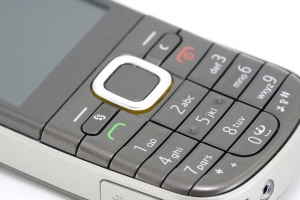
cell-phone.jpgSan Diego – Back on June 14th in our entry titled Microsoft And Others Oppose Nortel’s Proposed Patent Sale to Google we reported that major technology companies such as Microsoft were objecting to Google’s $900 million bid to purchase Nortel’s patent portfolio.  It appears that Microsoft and a consortium of rival tech companies have backed up their objections and outbid Google.

The consortium, which includes Microsoft, Apple, Sony, EMC, Ericsson, and Research in Motion purchased the patents for $4.5 billion in the auction that took place over several days.  The portfolio consists of over 6,000 patents for different technologies, including the 4G wireless technology, which is supported by the Android phone. 

“This outcome is disappointing to anyone who believes that open innovation benefits users and promotes creativity and competition,” Google Senior Vice President and General Council Kent Walker said in a statement.  “We will keep working to reduce the current flood of patent litigation that hurts both innovators and consumers.” 

In a world where technology patents are often disputed, Google and its host of Android competitors are no strangers to legal battles.  In 2010, Apple filed a patent infringement suit against Taiwanese phone-maker HTC while software giant Oracle is suing Google for $2.6 billion in damages for the alleged infringement of patents that Google used in its Android mobile operating system. 

It comes as no surprise that Google was eager to purchase Nortel’s portfolio to protect itself in an increasingly patent litigious world.  What is surprising is that Google allowed itself to be outbid by its rivals.  This was Google’s big opportunity to position itself as a major player in Android technology with an impressive patent portfolio to strengthen its negotiating power. 

detroit.jpgLos Angeles – In a trademark infringement dispute filed by Chrysler, a judge ruled Tuesday against the auto-maker’s request to bar local retailer, Pure Detroit, from selling T-shirts with the slogan, “Imported From Detroit.”  Records indicate that Chrysler applied for the “Imported From Detroit” trademark in late 2010.

Chrysler first introduced the slogan on February 6, 2011, in a Super Bowl television commercial featuring rapper Eminem and the new Chrysler 200.  The buzz that the ad created gave both Chrysler and the Motor City a much needed boost, amidst tough economic times.  Fans of the two-minute commercial which featured famous Detroit landmarks, thought that it painted the city as a survivor in the reality of its harsh economic adversity.  The Chrysler 200 became the auto-maker’s best-selling car last month and the ad won five awards, including four 1st place Gold Lions at the Cannes Lions 58th International Festival of Creativity in France. 

According to U.S. District Judge Arthur Tarnow, Chrysler failed to prove that it will suffer irreparable harm if Pure Detroit continues to use the slogan on its T-shirts and merchandise.  Judge Tarnow also ruled that a likelihood of confusion did not exist and that consumers would not believe the merchandise sold by Pure Detroit was affiliated in any way with Chrysler. 

Pure Detroit countersued Chrysler and has attempted to block its trademark applications by claiming that the phrase is descriptive and geographically mis-descriptive because Chrysler is not in Detroit.  Chrysler has headquarters in Auburn Hills and the car at issue is assembled in Sterling Heights.

Although Chrysler will continue to pursue the lawsuit against Pure Detroit, the judge’s decision to allow the retailer to resume sales of merchandise with “Imported From Detroit”, is undoubtedly a major set-back for the car company.  A statement from Chrysler spokesman Michael Palese stated: “Chrysler Group is disappointed with this opinion and will continue to pursue all avenues to protect our ‘Imported From Detroit’ trademark.”

Palese went on to suggest that Chrysler may try again to settle out of court with Pure Detroit, even though previous settlement offers were rejected by the retailer.

frog-prince.jpgSan Diego – HomeVestors of America, Inc., a franchised business that buys up bank-owned and hard-to-sell homes for cash, has been busy lately protecting its WE BUY UGLY HOUSES trademark.  HomeVestor’s business has flourished since the housing bubble popped, making it increasingly aggressive with protecting its intellectual property against third-party infringers.

HomeVestors is the #1 buyer of houses in the U.S.  Only the company’s franchisees are authorized to use its registered trademarks in connection with their franchised business.  Over the past five years, HomeVestors has continued to rank in the respected Franchise Business Review’s “Top 50 Franchises,” which recognizes the franchisors with the greatest franchisee satisfaction. 

Recently, HomeVestors has ramped up its fight against the use of variations of the WE BUY UGLY HOUSES trademark in domain names registered by third-parties who wish to attract consumers to their own competing websites.  In addition to trademark infringement, this type of infringement is considered to be cyber piracy under the Lanham Act, 15 U.S.C., Section 1125(d)(1) for which statutory damages can be awarded up to $100,000 per domain name. 

Since 2010, HomeVestors has successfully had more than six domain names transferred back to it that were illegally registered.  It is also in the process of transferring over more illegally-registered domains and has been successful at disabling many infringing websites and unauthorized Facebook pages. 

To some, WE BUY UGLY HOUSES may appear to be just a silly marketing phrase that cannot be owned or protected but that is not the case.  In fact, the phrase can function as a potentially strong trademark and thus any infringing uses must be policed for the company to retain rights.

“We have spent a great deal of time and money building our brand,” said David Hicks, HomeVestors’ Co-President.  “It is very important for us to maintain the strength of that brand for the benefit of our company and our franchisees.  We will continue to pursue those who would infringe upon our trademarks in the interest of hijacking our customers or discrediting our hard-earned reputation.”


recordplayer.jpgLos Angeles – Cleveland rapper DJ Orrin Lynn Tolliver, Jr., has reached a settlement in a copyright infringement case involving the unauthorized use of a sampling of his 1982 rap hit, ‘I Need a Freak’  in a Black Eyed Peas song.  Tolliver’s copyright was infringed when it was used in the Peas 2005 smash hit ‘My Humps’, which became their third top ten single in the U.S.

Tolliver wrote and recorded ‘I Need a Freak’ with his band, Sexual Harassment while at friend and collaborator James McCants’ Heat Records recording studio.  The song was registered by McCants with performing rights organization BMI, giving Tolliver credit as the songwriter under the alias David Payton.  Under the agreement, Tolliver was entitled to receive 75% of any royalties received from the song.

Years later, without the knowledge of Tolliver, McCants negotiated the release of Sexual Harassment’s 1983 album, ‘I Need a Freak’ with Montage Records.  The album went on to sell over 100,000 copies and when the title song of the album was covered by rapper Too Short on the Priority Records rap compilation, ‘In Tha Beginning’, Tolliver finally sent a cease and desist letter to McCants, in which he denied licensing the composition to the label.

‘I Need a Freak’ continued to be used in several different rap compilations between 2000-2005, even though McCants maintained that he was not involved in its licensing.  Tolliver finally filed a copyright infringement suit against McCants in 2005, when he recognized his song as the key sample in ‘My Humps.’  Over the course of the lawsuit, which was filed in the United States District Court for the Southern District of New York, McCants initially denied that he ever issued a license and that the song was not sampled by the Black Eyed Peas.  He then changed his defense by claiming that he was co-writer for ‘I Need a Freak’ and co-owner under the work-for-hire doctrine. 

Although McCants was granted a 2009 motion for reconsideration after he was found guilty in the first verdict, the judge ultimately ruled in favor of Tolliver.  McCants was ordered to pay Tolliver $1.2 million in royalties and damages.

While the Black Eyed Peas were not named in the judgement, they are currently facing other copyright infringement allegations for their songs, ‘Boom Boom Pow’, and ‘I’ve Got a Feeling.’

Capital-building.jpgSan Diego – After several unsuccessful attempts in previous Congresses, the House Judiciary Committee finally passed the America Invents Act by a 32-3 vote.  Large companies such as Google, Johnson & Johnson, 3M, General Electric, Apple, Dell, and Facebook have supported the House bill, making it the first significant revamp in the U.S. patent system in sixty years.  

Under the new bill, patents will be granted on a first-inventor-to-file system rather than the first-to-invent system of the past.  The first-inventor-to-file system has been the international standard, with the U.S. and the Philippines the only countries to still utilize the first-to-invent system. 

The House bill has received the backing from the Obama Administration, which has promised to aggressively protect Intellectual Property in the U.S..  In 2009, Obama appointed Victoria Espinel to the position of United States Intellectual Property Enforcement Coordinator, in which she is responsible for the development and implementation of the Administration’s overall strategy for the enforcement of Intellectual Property.  The Administration issued a statement of policy on the matter, saying, “This provision provides greater certainty for innovators, reduces legal costs that often burden small businesses and independent inventors, and makes it easier for innovators to market their inventions in the global marketplace.”

In addition to providing for the first-inventor-to-file standard, the bill would also alter the process by which the United States Patent and Trademark Office (USPTO) issues business method patents, which protect the ways that business can be conducted, such as online sales methods or insurance procedures.  The new House bill would also eliminate all tax strategy patents, a move that is strongly supported by the American Institute of Certified Public Accountants and the Financial Planning Association. 

The USPTO will be required to appoint an intermediary to work with small businesses and independent inventors who need guidance through the patent filing process.   Pro bono programs will be established through efforts of the USPTO director and Intellectual Property law associations to assist inventors lacking the funds to pay the patent filing fees. 

Although having received overwhelming support, the new America Invents Act has faced harsh criticism over the fact that it reserves the right to divert fees collected by the USPTO to other uses.  The House Judiciary Committee maintains that while these fees may be diverted, they will remain solely for the use by other areas of the USPTO.

socialnetworks.jpgSan Diego – Google has recently filed a trademark for a new service called “Photovine” but nobody is completely sure what it is.  Click here to see the Photovine Trademark Application.  The Photovine.com domain name is registered under an unnamed owner.

What we do know about “Photovine” is that it is non-downloadable software like a cloud service, and will be used for the “transmission of visual images and data by telecommunication networks, wireless communication networks, the Internet, information services networks and data networks.”  It appears that this will be another image-sharing service and interestingly, it has been trademarked in the category for “on-line social networking services.”

Regarding the Photovine.com domain, there has been no confirmation that Google is the registered owner.  Initially, the domain was registered to a Matthew Gibson, but it has since changed owners.  The new domain registrant is MarkMonitor, a company that registers on behalf of other companies who want to retain their anonymity. 

What makes this new service even more puzzling is that Google already owns and operates Picasa, an image organizer and image viewer for organizing and editing digital photos and includes a photo-sharing website.  It is possible that Photovine will be a new sub-service to Picasa to allow for easier image sharing on smartphones and social networks.  Since the trademark descriptions listed above strongly hint at an image-based cloud service, it seems that a new service so similar to Picasa would be redundant.  For that reason the new service may be more social networking based.

Although Google has us somewhat in the dark on this one, it is clear that it wants a larger part of the social networking pie. 

neurons.jpgLos Angeles – The United States Patent and Trademark Office recently granted patent protection to Los Angeles-based ImmunoCellular Therapeutics (IMUC) for its technology in the treatment of cancer for which it holds an exclusive, worldwide license.  The biotechnology company which focuses on the development of immune-based cancer therapies is calling its new patent No. 7,939,090 the “System and method for the treatment of cancer, including cancers of the central nervous system.”

The exciting new technology covers the combination of a dendritic cell-based vaccine combined either before or concurrently with chemotherapy at the recurrence of the cancer.  IMUC insists that a dual therapeutic approach that includes the administration of a dendritic cell-based cancer vaccine combined with chemotherapy could greatly increase the clinical potency of treatment.  This would be especially true for cancers of the central nervous system such as glioblastoma multiforme (GBM), which is the deadliest form of brain cancer. 

In a recent statement by IMUC president and CEO Manish Singh, Ph.D., he said, “This patent has applicability to multiple types of cancer, including our first clinical target, glioblastoma.  ICT-107, the Company’s dendritic cell-based vaccine candidate for the treatment of GBM, elicits a cyto-toxic tumor reactive response that in combination with chemotherapy might fundamentally alter tumors by priming their death machinery.”

IMUC recently announced the expansion of its Phase II clinical trial of ICT-107 to more than 20 clinical locations.  This trial is a double-blind, placebo-controlled, 2:1 randomized study to determine the safety and effectiveness of ICT-107 in patients with newly diagnosed GBM.  IMUC is accepting patients at medical institutions in collaboration with leading physicians in neuro-oncology at the clinical study sites.

Last year, IMUC was granted patent protection on monoclonal antibody ICT-69 which targets multiple myeloma and ovarian cancers.  The antibody has demonstrated high specificity to these cancers by targeting a novel cell surface antigen.